Manoj Parmar works:
Monday and Wednesday at Moseley
Tuesday and Thursdays at Barnt Green
Fridays at Blythe Valley Park

Dipesh Parmar works:
Monday and Fridays at Blythe Valley Park
Tuesdays and Thursdays at Moseley
Wednesdays at Barnt Green
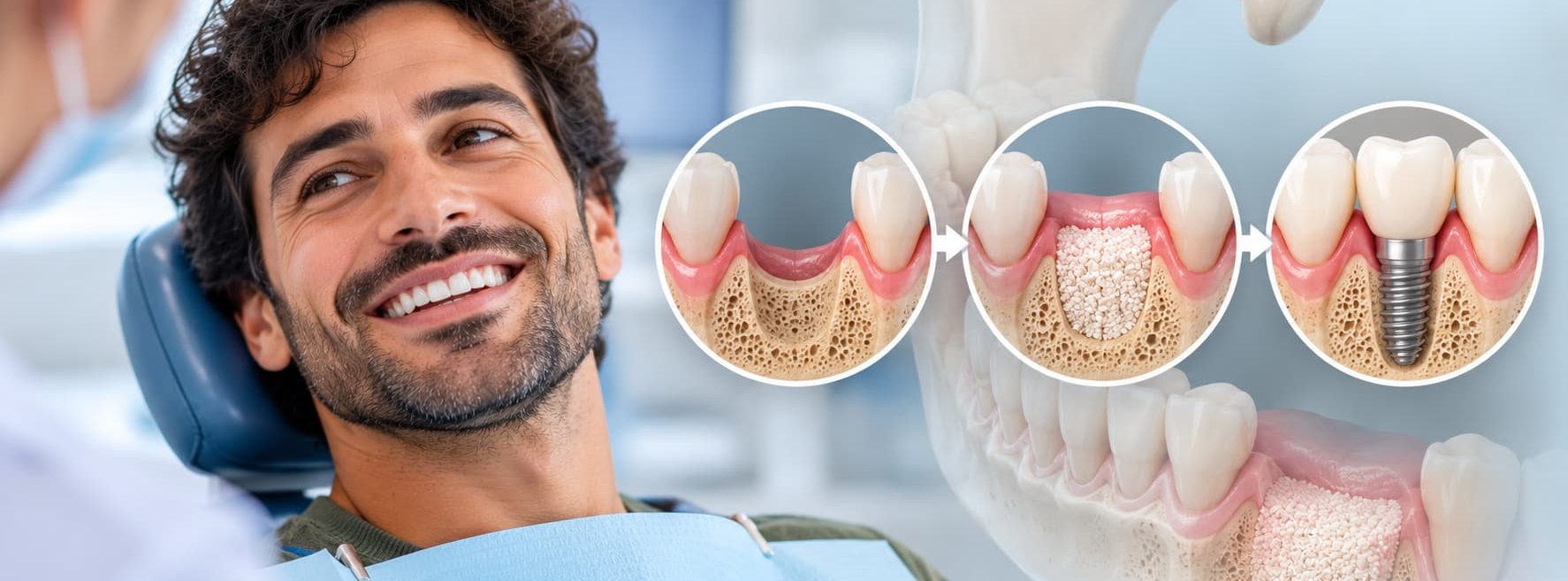
At Acorn Dental, implant planning begins with a detailed assessment of the mouth, gums, and jawbone. This helps the dentist understand whether the implant area has enough support or whether extra preparation is needed first.
A dental implant is placed into the jawbone, where it needs time to heal and become stable. If the bone is too thin, too shallow, or weakened, it may not provide enough support. This can affect how the implant is positioned and how well the area heals after treatment.
Bone loss is common after a tooth has been missing for a while. Once the tooth root is no longer present, the jawbone no longer receives the same daily pressure from biting and chewing. Over time, the bone can reduce in size. This may leave less space and support for future implant treatment.
Bone grafting may be needed for different reasons. Some patients lose bone because a tooth has been missing for several years. Others may have had infection, gum disease, injury, or a previous extraction that affected the surrounding bone.
A dentist may recommend bone grafting if:
This step is not always required. Some patients have enough bone for implant treatment without grafting. The only way to know is through a clinical examination and imaging.
Bone grafting involves placing graft material into the area where more support is needed. The aim is to help rebuild the jawbone so it can provide a stronger foundation for implant treatment. Depending on the case, grafting may be carried out before implant placement or during the same appointment.
After grafting, the area needs time to heal. The healing period varies from patient to patient and depends on how much bone needs to be rebuilt. Your dentist will explain the expected timeline before treatment begins, so you understand each stage clearly.
Choosing a dental clinic in Birmingham for implant care allows patients to receive a proper assessment before treatment starts. Careful planning can help reduce risks and ensure the implant is placed in a suitable position.
At Acorn Dental, patients from Moseley, Barnt Green, and Blythe Valley Park can discuss whether bone grafting may be needed before a dental implant. The aim is to prepare the jaw properly, support healing, and create a stable base for long-term oral function.