Manoj Parmar works:
Monday and Wednesday at Moseley
Tuesday and Thursdays at Barnt Green
Fridays at Blythe Valley Park

Dipesh Parmar works:
Monday and Fridays at Blythe Valley Park
Tuesdays and Thursdays at Moseley
Wednesdays at Barnt Green
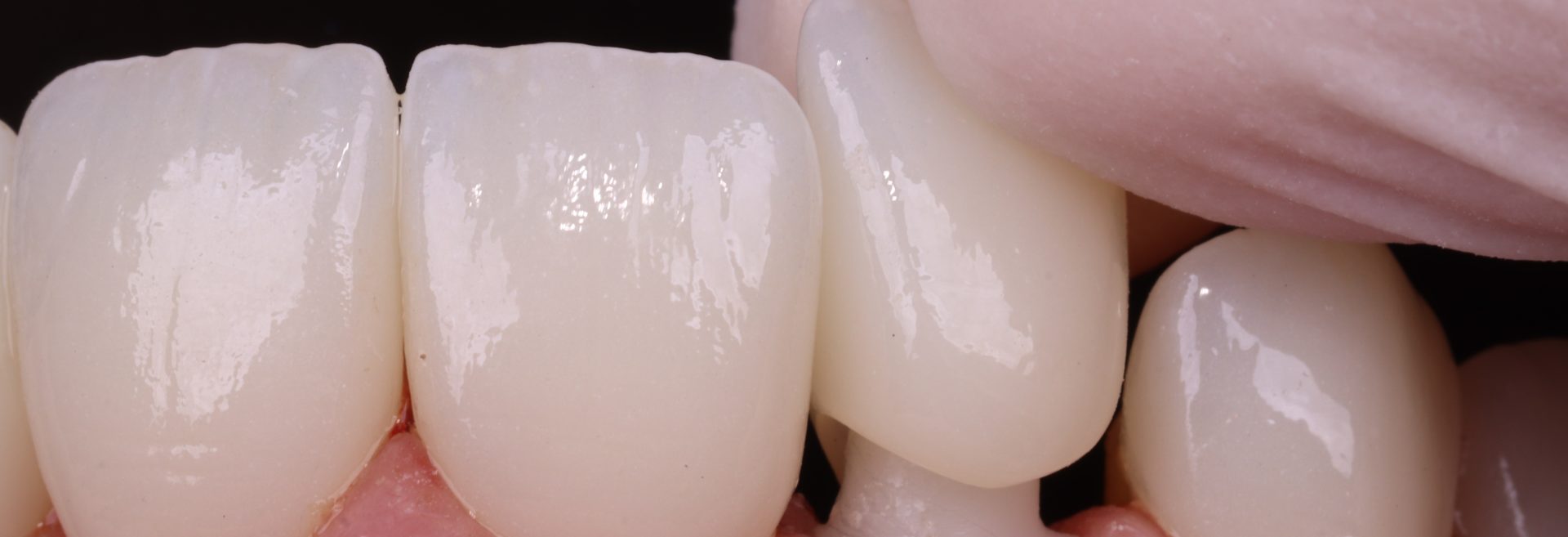
If you have spent any time on TikTok or Instagram in the last few years, you have probably seen the before-and-afters: bright, even teeth, treatment combined with a trip abroad, and prices that can be considerably lower than private cosmetic dentistry in the UK.
There is nothing unreasonable about looking into it. Plenty of people who come to see us have considered dental treatment abroad, and some have already had it.
What matters before you book is understanding exactly what treatment you are being offered. “Turkey teeth” is a nickname, not a dental procedure, and it can describe very different types of treatment.
One of the most important questions to ask is whether you are being offered veneers or crowns.
A veneer is a thin restoration bonded primarily to the front surface of a tooth. Some tooth preparation may be required, depending on the type of veneer and the individual case.
A crown is different. It covers the tooth and generally requires preparation around more of the existing tooth structure so that the restoration can fit over it.
That distinction matters because removing healthy tooth structure is irreversible.
Research has demonstrated that the amount of tooth removed can vary substantially according to the restoration and preparation technique being used. Published laboratory measurements have found much greater tooth reduction with full-coverage crown preparations than with more conservative veneer preparations.
The precise amount removed in an individual patient will depend on their teeth, the material being used, the dentist’s technique and the treatment plan.
So rather than relying on the name given to a cosmetic package, ask: Am I having veneers or crowns, and how much of each natural tooth will need to be removed?
Your dentist should be able to explain this before treatment begins.
No. “Turkey teeth” is an informal term rather than a clinical diagnosis, and it would be misleading to suggest that everyone travelling to Turkey receives the same treatment.
Some patients receive veneers, some receive crowns, some have implants or other restorative treatment, and treatment plans vary considerably between providers and patients.
There is, however, evidence that UK dentists see patients requiring follow-up treatment after dental treatment abroad.
In a 2022 British Dental Association survey of 1,000 UK dentists, 86% of respondents said they had treated patients who developed problems following dental treatment overseas. Among those dentists reporting such cases, crowns were the treatment most frequently identified as requiring follow-up care.
That survey tells us about the experiences of the dentists who responded and the problem cases reaching them. It does not tell us how often overseas dental treatment as a whole goes wrong, and it should not be interpreted as doing so.
Cost is an obvious reason.
Private cosmetic and restorative dentistry can represent a significant expense, particularly when treatment involves many teeth. Overseas providers may advertise packages at substantially lower headline prices, sometimes combining treatment with accommodation and transfers.
There is no reason to criticise someone simply for considering treatment abroad. The useful question is whether the treatment being offered is appropriate, whether the patient understands what it involves and whether the price comparison includes the things that could matter later — what is included, what is not, and what happens if you need further treatment afterwards.
Crowns and veneers should not be regarded as lifetime treatments.
Published research generally reports good survival rates for many types of crowns, but longevity varies according to the material, the condition of the underlying tooth, bite forces, oral hygiene, gum health and other clinical factors.
A 2015 systematic review of single crowns reported five-year survival rates of approximately 92% to 97%, depending on the material studied. These are general research figures rather than predictions for an individual patient or a particular clinic or country.
There is another consideration that is particularly important when healthy teeth are being treated.
Once significant tooth structure has been removed for a restoration, it cannot be put back. If that restoration eventually needs replacing, the dentist has to work with the tooth structure that remains.
That does not mean a crown will necessarily cause a problem. Crowns are established dental treatments and can be entirely appropriate when clinically indicated. It does mean that the long-term implications deserve consideration when crowns are proposed primarily to change the appearance of otherwise healthy teeth.
A useful question before treatment is therefore not only “How long will these last?” but also “What are my options when they eventually need replacing?”
Yes. Describing dentistry in Turkey simply as “unregulated” is inaccurate.
Dentistry in Turkey operates within a regulatory framework. Dentists are subject to professional registration requirements, while dental practices and healthcare facilities are subject to licensing and oversight requirements administered by the relevant Turkish authorities.
Providers treating international patients may also be subject to specific requirements under Turkey’s health-tourism regulations.
Regulation does not, of course, mean that every dentist, clinic or treatment plan is identical. The same principle applies when choosing healthcare anywhere.
If you are considering treatment abroad, check the credentials of the dentist who will actually treat you and the status of the facility rather than relying solely on advertising, reviews or the reputation of a destination.
Before paying a deposit, consider asking:
Those questions are useful whether your dentist is in Birmingham, Solihull, Istanbul or anywhere else.
If you have already had dental treatment abroad and you are worried about something, the sensible next step is simply to have it assessed. There is no reason to feel embarrassed about where you chose to have your dentistry.
We see patients with dental work carried out by many different dentists, both in the UK and overseas. Our job is to look at what is there now and explain your options.
If you have records, X-rays, scans, treatment plans or information about the materials used, bring them with you if possible.
If everything looks healthy, we will tell you. If something needs attention, we can explain what we have found, what options are available and the likely costs before you decide what to do.
If your main goal is to change the colour, alignment or shape of your teeth, crowns are only one possible approach.
Depending on your teeth and what you want to achieve, alternatives might include whitening, composite bonding, orthodontic treatment or veneers.
These treatments are not interchangeable, and none is automatically the right choice. Some may, however, allow the desired result to be achieved with less removal of natural tooth structure.
Where veneers are appropriate, they can generally be more conservative of tooth structure than full-coverage crowns. In other situations, a crown may be the clinically appropriate restoration.
The important point is that the decision should follow an examination and diagnosis rather than the other way around.
We are a dental practice in Birmingham, Barnt Green and Solihull, so naturally we provide dental treatment ourselves. But the questions in this article apply just as much to treatment carried out here as they do to treatment overseas.
Before making an irreversible change to healthy teeth, understand what is being proposed, what alternatives exist and what the long-term implications are.
“Turkey teeth” is an informal term commonly used online to describe cosmetic dental treatment carried out in Turkey, particularly treatments that produce a very white and uniform smile. It is not the name of a particular dental procedure.
Depending on the patient and provider, treatment may involve veneers, crowns, implants or a combination of procedures. That is why it is important to establish exactly what treatment is being offered rather than relying on the nickname.
They can be either, and the distinction is important. A veneer primarily covers the front of a tooth, whereas a crown covers much more of the tooth and usually requires more extensive preparation.
If you are considering treatment, ask the provider to specify in writing what restoration is proposed for each tooth and how much natural tooth structure is expected to be removed.
There is no single material used for what is popularly called “Turkey teeth”. Depending on the treatment, restorations may be made from zirconia, other ceramics, porcelain fused to metal or other dental materials.
Material is only one part of the decision. The health of the underlying teeth, the amount of tooth preparation, the quality of the fit, the bite and the treatment planning are also important.
There is no single lifespan because “Turkey teeth” can describe different treatments and materials. Crowns and veneers can last for many years, but no responsible dentist can guarantee that a restoration will last indefinitely. Longevity depends on numerous clinical and patient factors.
When considering extensive treatment, it is worth asking not only how long the restorations are expected to last but what treatment might be required if one or more eventually need replacing.
There is no meaningful yes-or-no answer based solely on the country where treatment takes place.
Turkey has qualified dental professionals and a regulatory framework for dental healthcare. As with dentistry elsewhere, individual providers, treatment plans and patient circumstances vary.
The relevant questions are whether the proposed treatment is clinically appropriate, whether you understand its risks and alternatives, how much natural tooth structure will be affected, who is carrying out the treatment and what arrangements exist for follow-up care.
Travelling for treatment can also create practical considerations because your treating dentist may be a considerable distance away if you need an adjustment or develop a problem after returning home. Those issues should be discussed before treatment rather than assumed to be included in a package.
Whether a dentist is able or willing to provide follow-up treatment will depend on your individual situation and their clinical assessment.
Some dentists may choose not to take responsibility for maintaining, repairing or replacing dental work originally carried out by another provider, particularly where they do not have access to the original treatment records, materials or implant information. This can apply to treatment carried out elsewhere in the UK as well as treatment carried out abroad.
At our practice, we are happy to assess patients who have previously had dental treatment elsewhere, including overseas. An assessment does not necessarily mean that every restoration can be repaired or maintained, but it allows us to examine your teeth and explain what options may be available.
Bring any treatment records, X-rays, scans and information about your crowns, veneers or implants with you where possible. The more information we have about your previous treatment, the easier it is to understand what has been done and advise you appropriately.
Healthy gums and good support around the teeth are important before crowns, veneers or other extensive cosmetic treatment is started — whether that treatment is in Turkey, the UK or anywhere else.
If you have active gum disease, proceeding without addressing it first can create problems later. Gum disease affects the tissues and bone supporting your teeth, and if it progresses, gums can recede, teeth can become mobile and the appearance and fit around crowns or veneers may change.
This matters even more when you are considering treatment across many teeth. New restorations cannot compensate for unhealthy foundations underneath them, and if the supporting teeth or gums deteriorate, expensive dental work may become much more difficult to maintain — or, in more advanced cases, may need further treatment.
That does not mean having gum disease rules out cosmetic dentistry. It means the condition should be properly assessed and, where necessary, treated and stabilised before irreversible cosmetic work begins. Make sure your assessment includes your gum health as well as the appearance of your teeth.
The advertised price of dental treatment in Turkey can be substantially lower than private treatment in the UK, which is understandably one of the main reasons people consider travelling for treatment.
The figure advertised, however, may not be the figure that matters in the long term. Check carefully what is included in the quotation, including investigations, temporary restorations, additional procedures, accommodation or travel, aftercare and what happens if something needs repairing or replacing once you are back home.
This becomes particularly important with extensive treatment. If several crowns, veneers or implants require further attention, the cost of additional appointments, replacement work and potentially travelling back to the original clinic can quickly reduce the initial saving.
There is also the practical question of who will look after the work afterwards. A local dentist may be able to help, but they are not automatically responsible for treatment carried out by another provider, and in some circumstances you may need to pay privately for assessment or remedial treatment.
A lower initial price can still represent good value when the treatment is appropriate and well planned. The important thing is to compare the whole treatment and its long-term implications, not simply the price on the original package.